
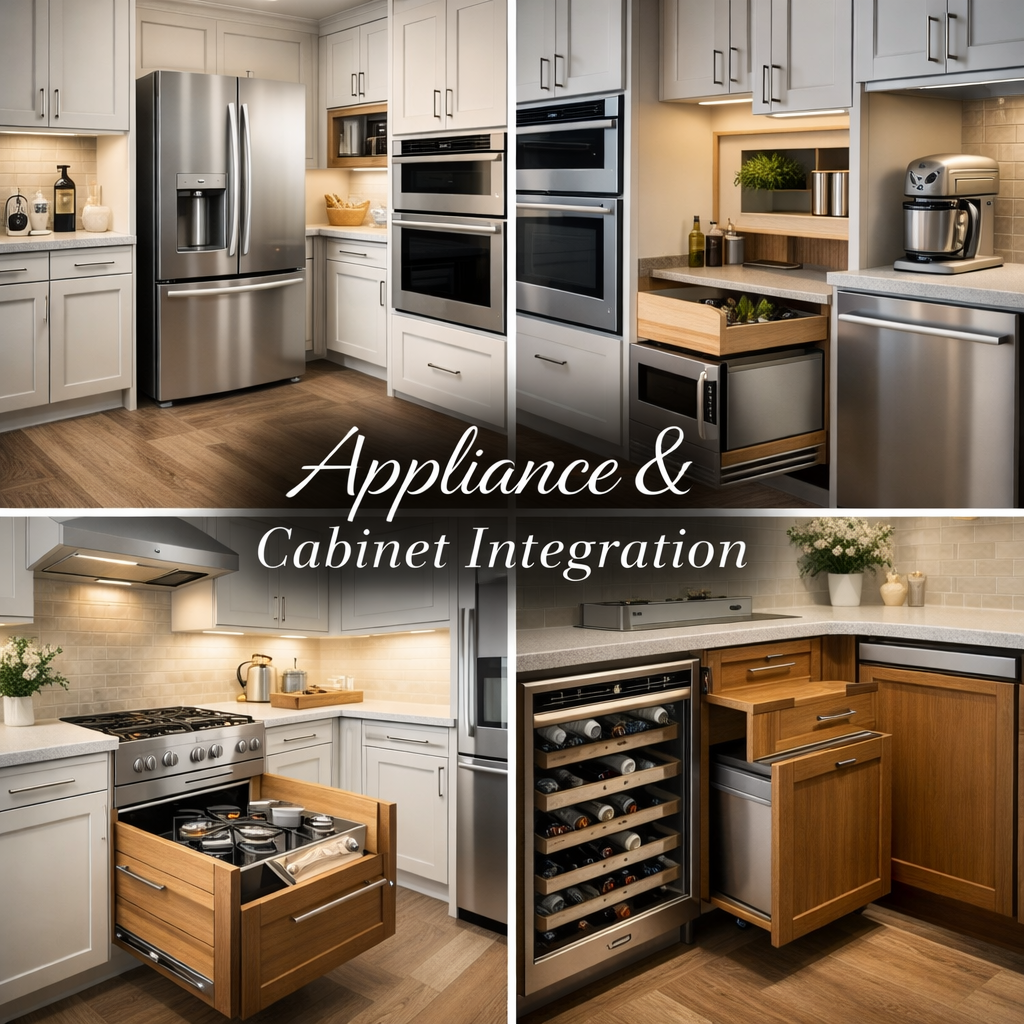
Modern kitchen design has shifted toward clean lines, seamless surfaces, and minimal visual clutter.
One of the defining features of contemporary kitchens is the use of integrated appliances—major appliances that are built directly into cabinetry or concealed behind custom panels. This approach creates a streamlined look where appliances blend naturally into the overall kitchen design.

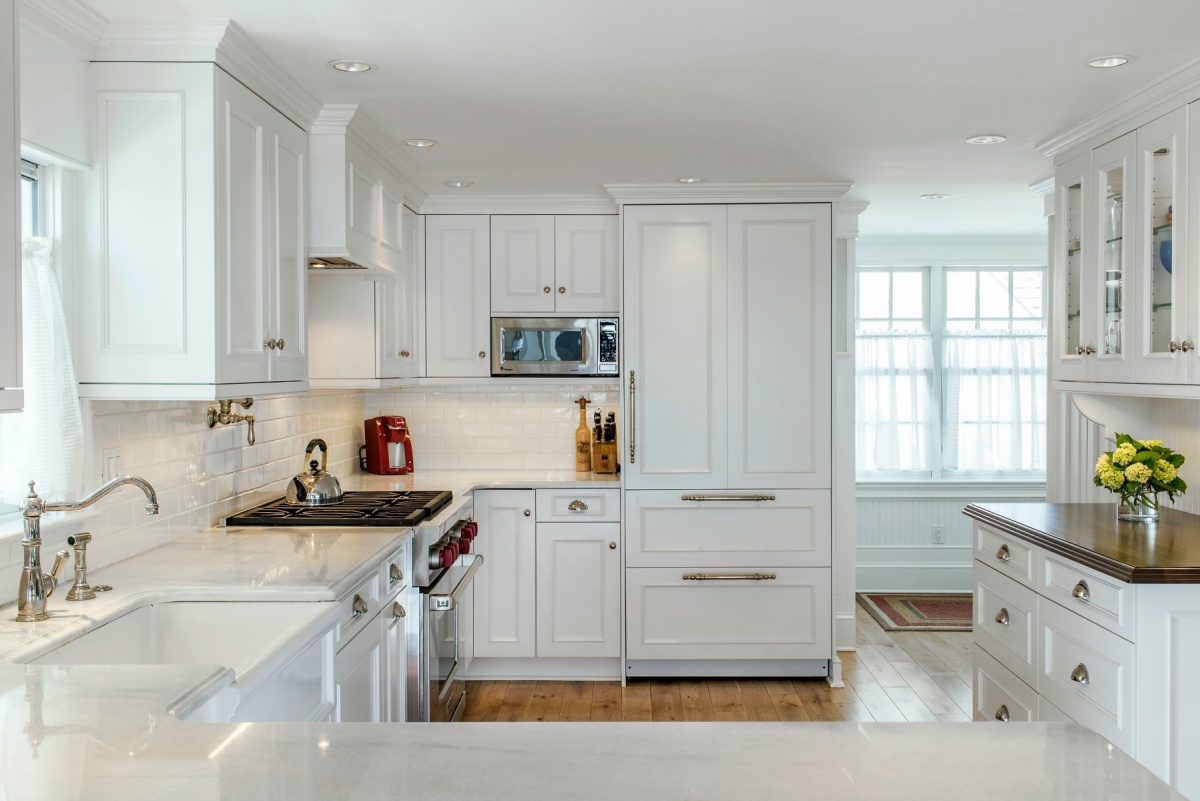
Images are linked to source
Integrated appliances are now a key element in luxury kitchen design, modern renovations, and high-end new construction.
What Are Integrated Appliances?
Integrated appliances are kitchen appliances designed to fit flush with surrounding cabinetry or hide behind matching cabinet panels. Unlike traditional freestanding appliances, these units are built into the kitchen layout to create a more cohesive appearance.
Common integrated appliances include:
- Panel-ready refrigerators
- Built-in wall ovens and microwaves
- Integrated dishwashers
- Drawer-style refrigerators and freezers
- Built-in coffee machines
- Concealed range hoods
When installed correctly, these appliances become part of the cabinetry system rather than standalone objects.
Benefits of Integrated Appliance Design
1. Seamless Kitchen Aesthetic
Integrated appliances allow kitchens to maintain continuous cabinet lines and consistent materials. Instead of stainless steel appliances interrupting the design, cabinet panels conceal the appliances to create a smooth, uniform look.
This style is especially popular in modern, Scandinavian, and minimalist kitchens.
2. Improved Space Efficiency
Built-in appliances often make better use of available space. For example:
- Wall ovens can be installed at eye level
- Refrigerators can align flush with cabinets
- Microwave drawers can be built into islands
This layout improves both workflow and ergonomics in the kitchen.
3. Luxury Design Appeal
High-end kitchens frequently incorporate integrated appliances because they contribute to a custom architectural feel. Instead of appliances dominating the room, the focus shifts to materials such as cabinetry, stone countertops, and lighting.
Integrated design is particularly common in kitchens featuring:
- Quartz or natural stone countertops
- Full-height slab backsplashes
- Custom cabinetry
- Minimal hardware or handleless cabinets
Popular Integrated Appliance Trends
Panel-Ready Refrigerators
Panel-ready refrigerators are designed to accept custom cabinet panels that match surrounding cabinetry. This allows the refrigerator to visually disappear into the kitchen wall.
Built-In Oven Towers
Modern kitchens often group ovens, steam ovens, and microwaves in vertical cabinet towers. This design creates a clean and functional cooking zone while improving accessibility.
Integrated Dishwashers
Integrated dishwashers hide behind a cabinet panel so that the appliance looks identical to surrounding cabinets. Controls are typically hidden along the top edge of the door.
Hidden Ventilation Systems
Modern kitchens frequently conceal range hoods inside cabinetry or use downdraft ventilation systems that rise from the countertop when needed.
Design Considerations
While integrated appliances offer a sleek appearance, they require careful planning during the kitchen design process. Important considerations include:
- Cabinet dimensions and appliance specifications
- Electrical and plumbing requirements
- Proper ventilation
- Appliance service access
Working with experienced designers and installers ensures that appliances fit perfectly and function correctly within the cabinetry system.
The Future of Kitchen Design
Integrated appliances represent the future of kitchen design because they combine technology, efficiency, and visual simplicity. As homeowners increasingly prefer open-concept living spaces, kitchens are expected to look more like furniture-driven living areas rather than traditional utility rooms.
By blending appliances into cabinetry, modern kitchens achieve a refined, clutter-free appearance that highlights the beauty of custom cabinets, stone countertops, and architectural lighting.