
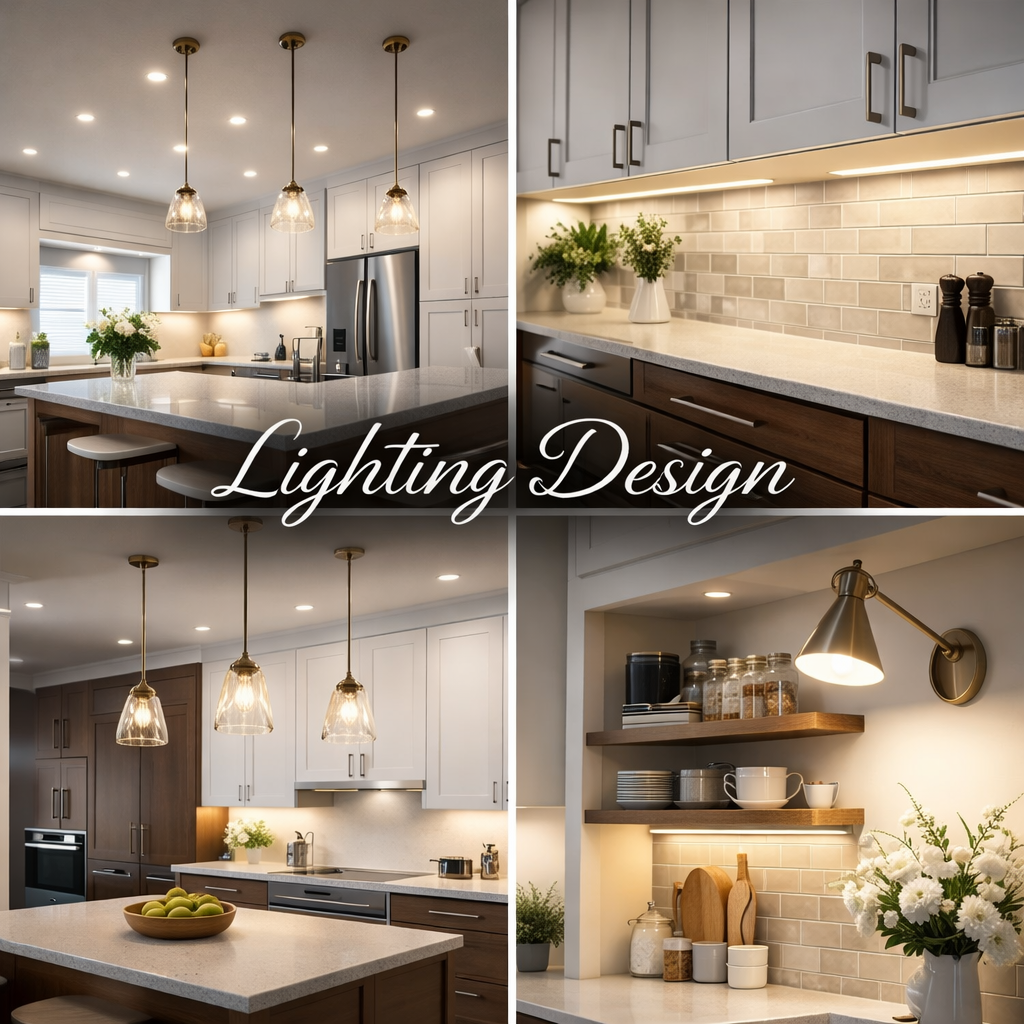
Modern kitchen lighting has evolved far beyond a single ceiling fixture. In 2026, lighting design focuses on layered illumination, architectural detail, and energy-efficient technology. When done correctly, lighting not only improves visibility for cooking and prep work but also enhances the overall style and atmosphere of the kitchen.
The foundation of modern lighting design is layered lighting, which combines multiple types of illumination to create balance and flexibility.
The three primary lighting layers include:
- Ambient lighting – general illumination from recessed lights or ceiling fixtures
- Task lighting – focused light for food preparation areas like countertops and sinks
- Accent lighting – decorative lighting used to highlight architectural features or design elements
Layered lighting ensures the kitchen is both functional for cooking and visually appealing for entertaining.
2. Statement Pendant Lighting

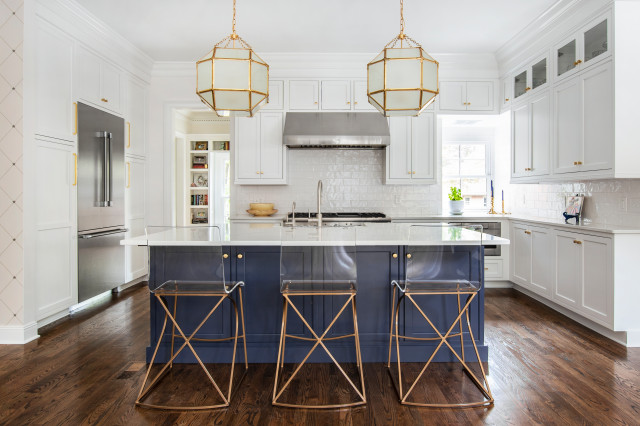
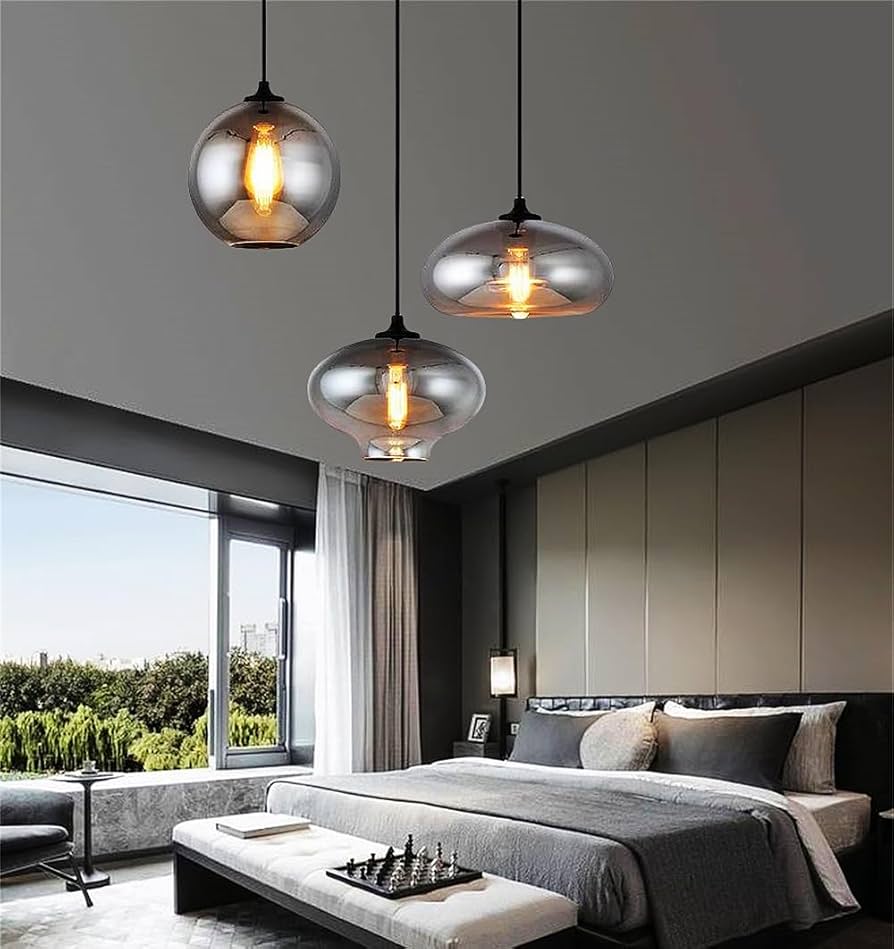
Image src is alternative text
Pendant lighting remains one of the most popular design features in modern kitchens. Suspended above islands or dining areas, pendant lights serve as both task lighting and decorative focal points.
Trending pendant styles for 2026 include:
- Minimalist glass pendants
- Matte black or brass fixtures
- Sculptural designer lighting
- Multi-light linear pendants
These fixtures help define the island as the visual centerpiece of the kitchen.
3. Under-Cabinet LED Lighting
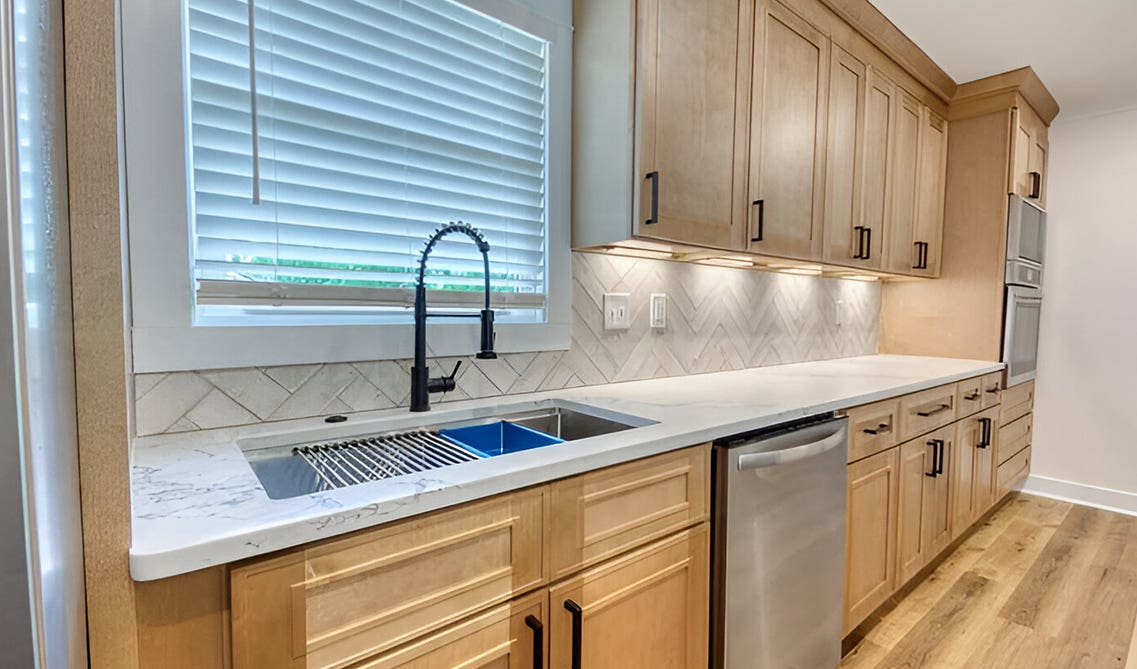
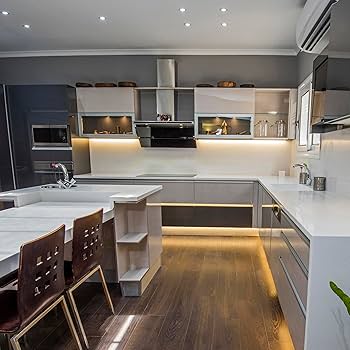
Image src is alternative text
Under-cabinet lighting is one of the most practical upgrades in modern kitchens. Installed beneath upper cabinets, these LED lights illuminate the countertop workspace and eliminate shadows.
Benefits include:
- Improved visibility for food prep
- Highlighting backsplashes and countertops
- Energy-efficient LED technology
- Hidden installation for a clean appearance
In high-end kitchens, continuous LED strips create a seamless glow along the entire counter surface.
4. Recessed Ceiling Lighting

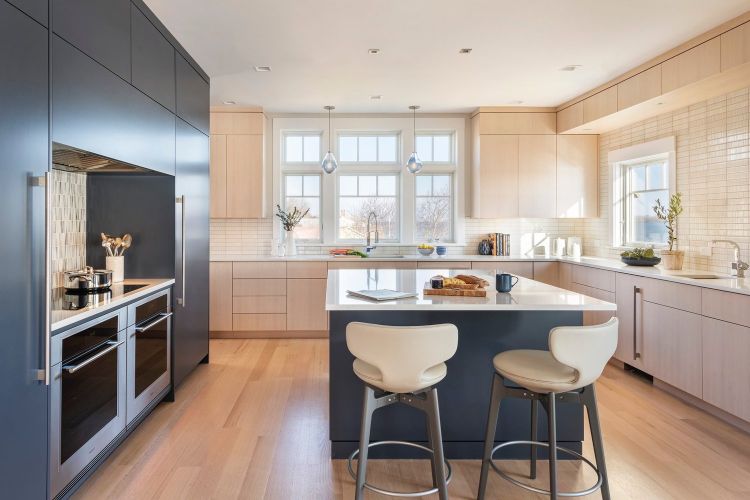
Image src is alternative text
Recessed lighting—often called can lights or downlights—provides the primary ambient lighting in modern kitchens. These fixtures are installed flush with the ceiling, creating a clean and uncluttered appearance.
When planning recessed lighting, designers typically:
- Space fixtures evenly across the ceiling
- Align lights with cabinet edges and walkways
- Use dimmers for adjustable brightness
The result is even, glare-free illumination that complements other lighting layers.
5. Accent and Decorative Lighting
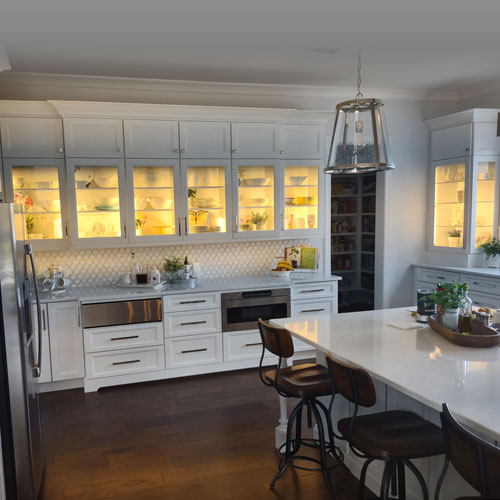
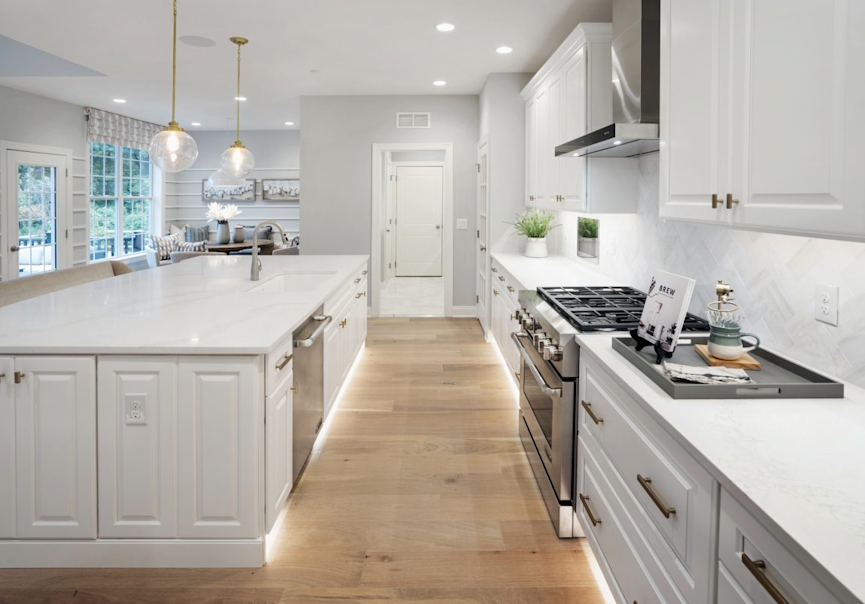
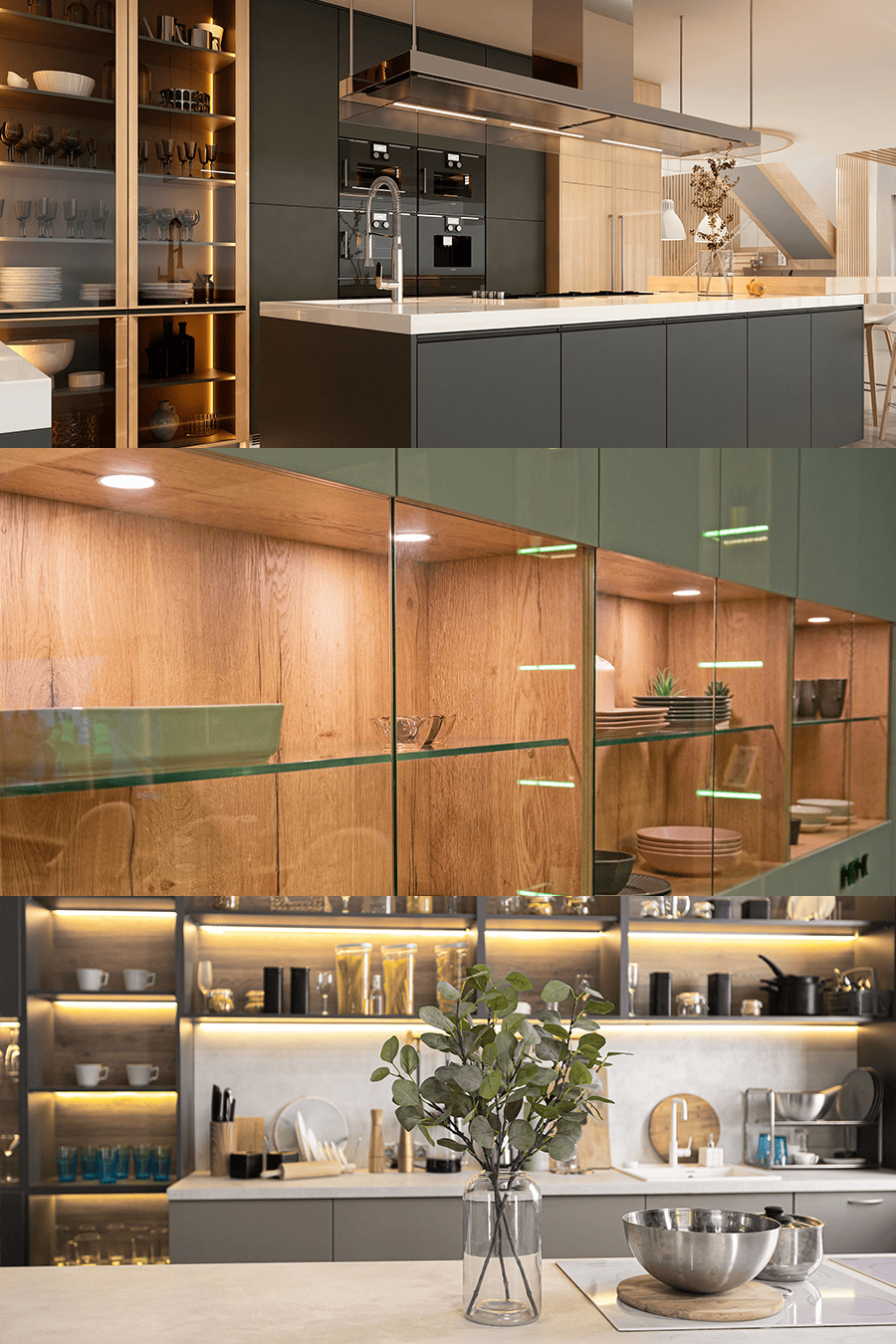
Accent lighting adds dimension and sophistication to modern kitchens. Instead of purely functional lighting, accent fixtures highlight specific architectural features.
Popular accent lighting elements include:
- LED lighting inside glass cabinets
- Toe-kick lighting beneath base cabinets
- Shelf and display lighting
- Island under-glow lighting
These subtle lighting effects create a luxury atmosphere while emphasizing design details.
Modern kitchen lighting in 2026 is all about combining functionality with design impact. By incorporating layered lighting, statement pendants, under-cabinet LEDs, recessed ceiling lights, and decorative accent lighting, homeowners can create kitchens that are both practical and visually stunning.
A well-designed lighting plan transforms the kitchen into a bright, inviting space perfect for cooking, gathering, and entertaining.